

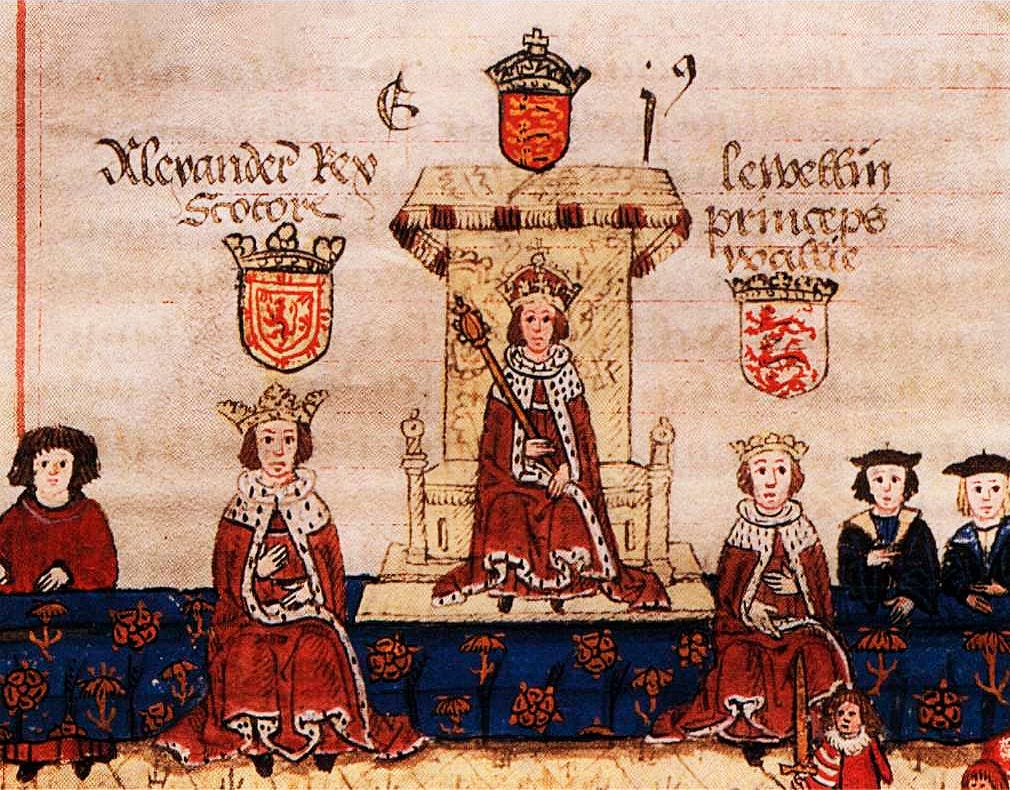
On 11 December 1282, on a cold winter day near Builth Wells, the fate of Wales was sealed. Llywelyn ap Gruffudd, the last native Prince of Wales, was killed during a skirmish with English forces. With his death, more than a man was lost. The centuries-old dream of an independent Welsh state died with him, and Wales passed decisively into the hands of the English crown.
Llywelyn had risen to power during one of the most unstable periods in Welsh history. Ambitious, politically astute, and an able military leader, he overcame rival princes and internal divisions to establish himself as the dominant ruler of Wales. In 1267, after years of conflict and negotiation, his authority was formally recognised by King Henry III in the Treaty of Montgomery. For a brief moment, Wales stood as a largely self-governing principality, its independence acknowledged by its powerful neighbour.
That fragile settlement unravelled with the arrival of Edward I in 1272. A formidable and determined ruler, Edward was committed to bringing the whole of Britain under firm royal control. Llywelyn, independent-minded and linked by marriage to the family of an English rebel, soon found himself in the king’s sights. In 1277, Edward’s first invasion stripped Llywelyn of most of his lands. Though he retained his title, the power behind it had been hollowed out.
The decisive struggle came five years later. In 1282, rebellion flared once more across Wales, initially led by Llywelyn’s brother, Dafydd ap Gruffudd. Llywelyn joined the uprising, perhaps sensing that survival now depended on one final gamble. Edward responded with overwhelming force. His armies advanced on multiple fronts, supported by new fortresses, disciplined troops, and secure supply lines. The balance of power was brutally clear.
Llywelyn’s death came suddenly and, in many ways, ignominiously. On 11 December 1282, separated from his men during fighting near Builth Wells, he was cut down by English soldiers. Only afterwards was his true identity confirmed. His severed head was sent to London and displayed on the Tower, crowned with ivy in mockery of his title, a grim public declaration that Welsh independence was at an end.
The final collapse followed swiftly. Dafydd ap Gruffudd was captured in 1283 and executed in a manner intended to erase any remaining challenge to English rule. The Statute of Rhuddlan, issued in 1284, formally placed Wales under direct control of the English crown. English law, officials, and administration replaced traditional Welsh governance, and a ring of mighty castles soon dominated the landscape.
Today, more than seven centuries later, the killing of Llywelyn ap Gruffudd remains one of the defining moments in Welsh history. It marked the end of native rule, the transformation of Wales into a conquered land, and the beginning of a long and complex relationship with England that continues to shape Welsh identity. His death was not simply the end of a battle. It was the closing chapter of an independent Wales.
I hope you have enjoyed this foray into history. Please subscribe to read more articles like this.
CLICK HERE to read more History and Happenings articles.

Have you discovered The Official Reading Companion and History Briefings for The Chronicles of St Mary’s series by Jodi Taylor?
If you’ve ever found yourself wondering who did what, when, and where in Jodi Taylor’s brilliant Chronicles of St Mary’s series — this is the companion guide you’ve been waiting for.
This guide is a must-have for both dedicated fans and curious newcomers. It contains synopses of every book and short story, detailed floor plans of St Mary’s Institute for Historical Research, History Briefings, chronological jump lists, character information, and more.
Whether you’re brushing up on the timeline or want to immerse yourself further in the chaos and charm of St Mary’s, this guide is your ultimate companion.
CLICK HERE to learn more.